Wednesday, June 5, 2013

The motherland of coffee

5 June 2013

Traditional Ethiopian clay coffee pot.

After oil, coffee is the second most exchanged commodity in the world. It’s the fuel that keeps many societies working; the reason why so many of can even begin to consider rolling out of bed each morning. If you’re a coffee drinker, you might be interested to learn that Ethiopia is the motherland of coffee.
Cafe arabica originates from Western Ethiopia in the Kafa zone. The local legend says that many years ago a peasant was herding his livestock and began to notice them expressing strange, erratic behavior. Upon closer observation he noticed that they had been eating leaves from an unfamiliar tree. He picked the tree leaves and cooked them for himself, experiencing a more energetic feeling after consumption of the brew. Ethiopian today use the leaves, fruit hulls and fruit seeds as a stimulant which is prepared by first drying, roasting, crushing and boiled with water. The seeds are most commonly used in other countries, but many parts of the plant contain caffeine and a taste great.

Green coffee beans and their dried exterior hulls.
Both of which make a delicious beverage.

Recently a UNESCO Biosphere Reserve was established in the Kafa zone of Ethiopia to protect around 200,000 ha of natural forest where the wild coffee grows (kafa-biosphere.com). This area is intended to be left under conservation so that the coffee may grow naturally without any human interference thus the genetic integrity and evolution of coffee is maintained. If cultivation and domestication of coffee ever goes awry with disease or pest problems (as seen with other popular crops including bananas) the Kafa Biosphere will be the saving grace. If left to grow and evolve naturally, plants such as coffee will have enough genetic diversity in their wild stock to have resilience against many pests and diseases. This biosphere in Ethiopia is a gift to the world, because without it if there ever was a disastrous coffee epidemic we could find ourselves caffeine fiends without our beloved morning buzz.

The majority of US adults are coffee drinkers. (Duh!) Many people never make their own coffee but purchase it instead. Many people are satisfied with instant coffee, some buy it pre-ground, and others do that “work” themselves each morning. But how many of you have roasted coffee yourself? In Ethiopia, coffee preparation starts from green beans every time. Here’s a step by step of the coffee roasting process.

1) Wash the beans at least 3 times and pick out all the ugly ones.


2) Roast them over medium heat until they crack, swell, become oily, smoke and smell delicious


3) Boil water in “jebinah” (local coffee pot), add ground coffee and boil again. After steam is visible let the jebinah sit at an angle until all the coffee grinds have settled. Pour coffee slowly into “seenies” (teenie-tiny cups).
My friend Tarikwa preparing a coffee ceremony at her home. 

If Ethiopians were into poly deism, coffee would be up there with Jesus Christ himself because Ethiopians worship coffee. Typically a “bunna mafla” (full coffee ceremony) takes 1 hour from start to finish and happens about 2-3 times a day in any given Ethiopian household. I wake up and go to sleep each day hearing the pounding of the beans being ground and smelling the coffee boil from my neighbor’s home. Watching an Ethiopian celebrate coffee each time they gently wash it, patiently roast it and slowly drink it (2 ounces at a time) makes me a little sad for my American culture. We consume more coffee than most countries in the world but do we really appreciate it? We have the opportunity to give more economic power and benefit to the farmers and countries that produce this substance we are so overwhelmingly addicted to, but we don’t. We buy it in bulk, we drink it like water but many do not know what a coffee tree looks like, where it originates from or how to make coffee from the start of a green bean to the delectable finish. But now YOU do!

I encourage you reassess and better appreciate your early morning friend, and give a big Halleluiah to Ethiopia, the motherland of coffee (Is it a coincidence that Ethiopia is also considered “the cradle of humanity?”)


P.S. Buy some Ethiopian coffee and let me know what you think!

Rainy season commences

3 June 2013

The big rainy season, known as “Krimpt,” is my favorite time of year in Ethiopia! Here are a few reasons why:

    • ·         Kids caught in the rain pull up their shirt collars over their head to protect themselves from getting wet. All I see is a bunch of mini Bevis and Buttheads running around. Fan-tastic!
      ·         It’s the only time I don’t feel bad for women wearing burkas.
      ·         When the rain falls Adaba doesn’t smell like S@#%.
      ·         I don’t have to worry about my school gardens or tree nurseries that always need watering.
      ·         The streets vacate as everyone escapes the rain. The rare and beloved silence is relaxing.
      ·         There is no guilt when I spend all afternoon writing letters and reading.
      ·         I love Ramadan and the rain means it’s almost here! 


Tuesday, May 28, 2013

coming around...

I’ve been absent for a long time, probably most of my blog followers have given up on me and found more maintained blogs with better pictures, stories and grammar. My apologies to those of you who know me personally and enjoy my blog because it’s one of the few avenues you can stay connected to me (maybe I’m giving myself to much credit?). So here’s a blog for those who still bother checking: including photos and personal details: stuff that entertaining blogs are made out of!
 
(I've been busy exploring Ethiopia)
The truth of the matter is that for many months I struggled with something unfamiliar to me, and could be categorized by others as depression/self-absorption/laziness or a unwelcome reality check. Put simply, I got burnt out by Ethiopia. Fortunately I had a long series of visitors over the past 6 months all of whom came to visit me at my site and experience life as I know it here. Highlights include:

When Brett played guitar and sang for students at the primary school with me. We wrote a song together and the students still sing it with me when I work at the school. Hopefully they understood the message and are more inclined to wash their hands, eat vegetables and say please and thank you. Before he came to visit Brett was mostly a friend of a friend but I’m delighted to know that I have a great friend to go paragliding and mountain bike with when I return to Missoula!
Me and Brett wandering around the fields outside of my town.
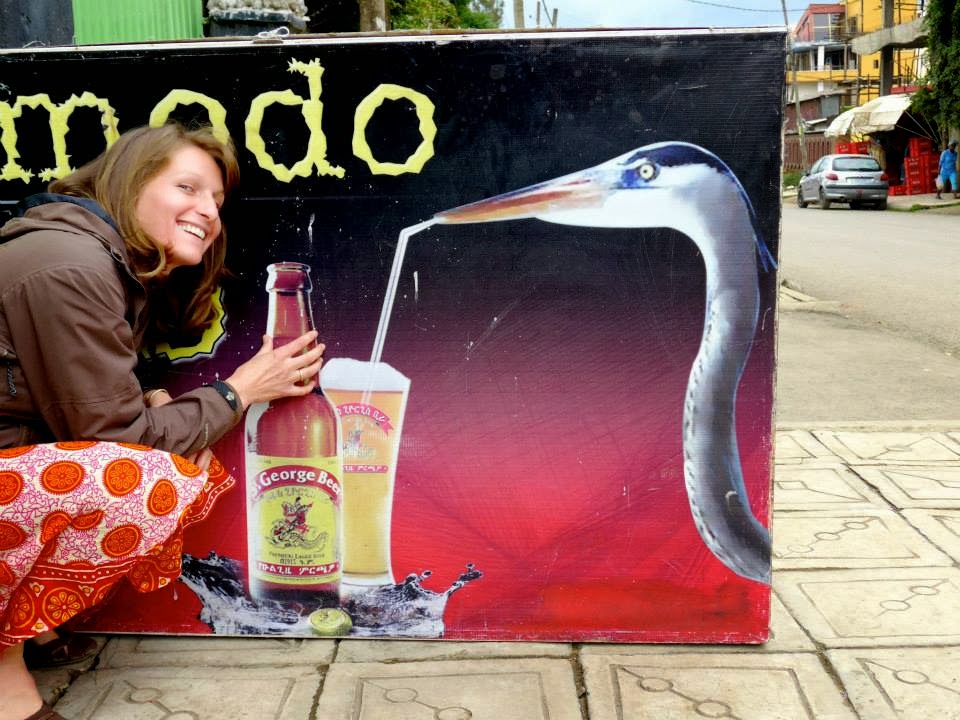
Enjoying Lake Awassa with our very knowledgeable and unsuspecting bird guru.


John and Shana came to visit me in February and what an adventure we had. I don’t for see me having such long string of exotic expeditions ever again. Memorable and humors events are a guarantee whenever John’s around, and it was only made better by his lovely lady Shana who taught me a lot about being graceful in Africa and relishing each moment. We covered a lot in a short period of time and were all totally worn out by the end of it. Thanks for helping me re-discover Ethiopia Shana and John.
Bale Mountains National Park

Next up was Hayley, 

one of my best pen-pals since I arrived and the only friend I actually believed when she said she was coming to visit during my PC service. Hayley was the only person who could calm me when I was worked up and scared about moving to Ethiopia. She assured me that I could not have had better luck than to be place in the Horn of Africa, and I think she was right. Hayley and I had 2 weeks in Ethiopia where we got lucky enough to see a wild leopard, hippos, Ethiopian wolves and the elusive honey badger. To wrap up our time together we went to Zanzibar (which again I was reluctant to do and she talked me into it; she always seems to know what is best for me). The pictures will reveal that Zanzibar is absolutely the most beautiful place ever, with wonderful people and all the nonsense fun that a bundle of low-budget travelers could hope for.  We hit all the tourist spots, sampled everything from the ocean buffet and are all determined to end up there again someday soon. Forget San Francisco, I left my heart in Zanzibar. Hayley, Katheryn and I made great travel partners and feel confident that we will stir up trouble somewhere else soon.
Stone Town

Stone Town's windy back streets always leave you happily disoriented

Picturesque beaches of Nungwi

On the way to Memba island

Getting up close and personal with the oldest extant animals in the world!


Most recently my dad and step-aunt, Beverly came to visit for a whopping 3 weeks! I made sure they got the full experience of near-death minibus rides, nasty hotel rooms, bus station chaos and plenty of rainy weather. We also had a lot of luxuries that I was grateful for including private vehicles, fancy hotels, in country flights and constant cribbage partners. It was a very busy couple of weeks but I’m really happy that we filled our schedule so they could meet so many of my Ethiopian and PC friends, experience rural life, learn that Ethiopia is very lush and mountainous and give me the encouragement to finish my last 6 months here strong.
Like father like daughter

Hiking in Bale Mountains National Park

We make great travel companions together!

The next visitors that I look forward to receiving is my ever-beloved friend from high school, Sarah, who wants to have it really rough here so that she returns extra motivated before she starts her PhD program this fall. Don’t worry Sarah, I’ll make sure that you are eager to leave and spend the next 4 years living under florescent lights and chasing deadlines. No problem! I promise I’ll leave the embarrassing “congratulations on your transgender operation Sarah Sam” sign at home this time when I pick you up at the airport. You’re going to love Ethiopia and I can’t wait to see you!

2011 was too long ago!

Last but not least, my favorite Montana gentleman is coming, a.k.a. JOE! Despite the mileage, poor internet access and turmoil Joe still thinks I’m worth sticking around for. Ladies and gentleman please give this man a pat on the back, a tip of the hat or a high five if you see him because I adore him and he’s a stand-up guy for staying by my side. Ethiopia will be a great reunion for us and hopefully the first of many travels we will share together.


To encourage me to keep writing blog posts, please put your suggestions below! 

Friday, May 24, 2013

e-mail to my academic advisor


Hello Steve,
Thank you for the e-mail informing me of what to expect when I return to school next year. I’m eager to wrap things up, mostly because of the financial aspect, but I know that I also need to be realistic and it is my priority to complete an outstanding thesis that I’m proud of and positively contributes to the people and places I’ve grown to love here in Ethiopia.

Regarding my thesis, many things have become jumbled. The shortened version is that the bamboo company I was involved with went bankrupt due to corruption and organizational issues. Fortunately I was working under an independent contractor and our assignment will be finished according to the original contract and handed off to local and international stakeholders. The work I have been involved with was helping to write and execute HH surveys, input and analyze data and finally to co-write the EIA report for both bamboo forest areas.

It has been a tremendous learning opportunity for me to see the challenges businesses face here in Ethiopia. This specific business was striving to create an ethical development project with admirable benefits for involved communities and bamboo forests. The concept appeared idyllic on paper and was very inspiring work in the beginning, but now that someone is incarcerated, 90% of the staff was let go (unpaid),  and the involved Ethiopian communities are very confused and unimpressed I have little hope that the business will survive. What a tornado of activity I’ve witnessed in the last 8 months! Fortunately I was just along for the ride and managed to obtain experience and information that will help me complete a thesis and hopefully prevent me from being a victim of incompetent employers in the future.

With that said, I have access to social, economic and ecological data from 2 different communities who rely heavily on bamboo for their livelihoods. Unfortunately for my previous project idea, it was recommended that I do not return to the communities to collect ecological data ( I wanted to conduct a bamboo forest inventory analysis) because it may further confuse the community and disrupt relationships. I agree with this suggestion and will work with the SEB and EIA information that I have. Potentially I’m thinking about writing a case study comparing these two communities and the potential of bamboo utilization and marketing in Ethiopia. I need to brainstorm some more and organize my ideas to settle on a more specific thesis plan.
For now at least, I wanted to respond to your e-mail and let you know:
  • ·         I intend to graduate sometime in 2014
  • ·         Ethiopia is constantly chaotic and full of life lessons
  • ·         My thesis has veered off track, but I am confident that I’m on the brink of some great ideas
  • ·         After all your years at University of Montana as an advisor, I’m sure none of this information surprises you
  • ·         I anticipate when you return from sabbatical we can laugh about all of this over beer and you can tell me your own shocking stories of promising research projects gone sour


Best, Bridget


Thursday, January 31, 2013

A bag of puppies


27 January 2013

Matt found a bag of puppies.
They were so young their eyes were not open yet.
He heard their whimpers while he walked by, lifted the rock and untied the knots to reveal them. The morning after they were nestled in rags, all 5 puppies fitting snug inside a small box. My presence awoke them as I sat with them, noticing their unique colors, their paws the size of pennies, their skin pink and pure. They pushed themselves around to get comfortable, to get oriented, to find the milk, but alas none of their siblings were lactating.

It happens every minute all over the world my friend” my brother tried to console me.

So what do we do? “Feed them goats milk and find a momma dog they can attach to” says my brother in America. Well in Ethiopia, most of the female dogs are killed so they don’t produce and create such situations. We have plenty of goats, but no goat milk is readily available. Even if we fed them, kept them alive, made them strong… is that a good solution?

Frank typed “Human ways to euthanize puppies” into Google search. Is this a superior solution? Are we saving ourselves from the burden of responsibility or are we really just shortening the time of calamity for these babies, letting them go quicker to peace.

Are they better off to grow up into street dogs? To be beaten by people, hit by cars and feel perpetual hunger? To reproduce and make more puppies who will be bagged and taken outside. What is the best answer? What is humane?

In Ethiopia the streets are shared by homeless dogs and people. I can’t lend much sympathy to either of them anymore. I offer “exabier yilisting” (God will provide) though these words are not sincere, and do not heal wounds, give shelter from the sun or offer hope for their children. We have no homes for the homeless, no money for pity, no help for the handicap and no space for sympathy.

For their sake, I’m glad the puppies were blind and unable to see all the shame in this world.

Friday, January 25, 2013

An exercise in poetry


24 January 2013


Before Ethiopia became a place of my reality
I knew it only as a distant story
of ancient cultures, diversity and infamous misery.
People who not only appeared but
spoke, lived and learned unlike me.
Landscapes raped of naturalness,
plowed, cut and inhabited for too long.
History, culture and community
inconceivable to me.

As Ethiopia became part of my future
I knew it only as an unexplainable truth
of limitless opportunities, challenges and necessary discomfort.
People at first unfamiliar but
become my family, friends and mentors.
Landscapes to explore,
admire and preserve for posterity.
Stories will evolve as time dissolves; their contribution initially
inconceivable to me.

When Ethiopia was my place of residence
I knew it only as a constant battle
of values and virtues imbalanced, disappointment and eager isolation.
People who lived meagerly
gave time, laughter and love abundantly.
Landscapes ever changing,
contours of color, texture and exhaustion.
Questions and answers like pieces to a fragmented puzzle
inconceivable to me.

Saturday, January 19, 2013

A trip to the market

13 January 2013

(All photo credits to Brett Kvo!)
Squeezing mangoes and avocados only 11 cents each!

Twice a week my small town of 15,000 people becomes flooded with thousands of horses and donkeys packing vegetables, clothes and animal hides. These pack animals are led by thousands of more villagers walking slowly towards Adaba’s central market which occurs every Wednesday and Saturday. Ethiopians do not use grocery stores as they depend on weekly markets and small corner stores called “suks”. Market days are a big event for everyone but especially the rural people (the other 155,000 people in my larger district) who are easy to pick out because their faces display shock and disbelief at the perceived “modernity” of my small town, which to many of them is the largest “city” they have ever visited.

Market products vary slightly from town to town because of local farming practices, climate and culture. Because my town is near to the large towns of Shashamene and Hawassa I am fortunate to be able to purchase a variety of fruits and vegetables. Some volunteers are restricted to cabbage, potatoes and carrots as their only available produce. There is coffee from at least 4 different areas, herbs and spices for every dish or health ailment and so many types of natural incense that your nose becomes unable to discern the subtle aromatic differences.
Dry peppers to make berberry with.

Cardamon pods.

Salt from the NE area of Ethiopia, Afar.

Coffee by the espresso cup only (2 birr = $0.11)!

Incense!
Sniffing some incense and learning about the local medicinal herbs.

Honey is abundant, but very dirty because it's only used to make mead (honey wine).
I'm trying to start a women's cooperative to clean the honey and start a edible honey market in Adaba.

Most everything is sold by the kilo including shoes, honey, onions and coffee. There are limited handicrafts such as baskets, pottery and decorated gourds to purchase while other more popular items such as sugar cane and rancid butter are always abundant. My purchases tend to be produce and coffee, and when I have the patience and energy I enjoy wandering around to see what other obscure items or vendors can be found. Typically my patience is exhausted after 30-60 minutes because my presence quickly encourages followers, mostly children, who indiscreetly go with me from one stand to the next exclaiming on my every comment and purchase.
Weekly market produce all under the price of $3.

After the market I confine myself to my small compound for the remainder of the day because going out only welcomes a mild anxiety attack. Even a short trip to the corner suk invites several rural people to gawk and yell at me or a near collision with a high speed horse taxi. Because my town is predominantly Muslim belligerent people are not common but on Wednesday and Saturday drunk people are everywhere and public urination seems to become an unspoken completion. Butchers toss out vertebras, skulls and hooves for the dogs and massive hooded vultures that squak, steal and scrounge for the best meal of the week. Speakers on the verge of short circuiting thump as kids dash through the bumpy streets, past the busy foosball and pool tables and through crowds of men shaking hands, hugging and stroking each others’ beards. A joyous party for everyone, but me, who prefers to read, cook and wash until the chill of dusk encourages people to return to their villages and anticipate the next market day.